
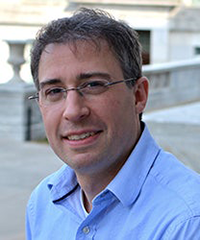
Andreas A. Werdich, Ph.D.

Andreas Werdich, PhD

Director of AI and Data Science, Core for Computational Biomedicine

Andreas Werdich is a physicist who received a Diploma in atomic physics from Freiburg University, Germany, and a PhD in physics from Vanderbilt University. His dissertation was focused on studying the molecular mechanisms of cardiac arrhythmias using high-speed fluorescence imaging of single cells in microfluidic devices. Dr. Werdich completed postdoctoral fellowships at Massachusetts General Hospital and Case Western Reserve University and in 2015, joined the faculty of Harvard Medical School at Brigham Women’s Hospital. Since then, he has been specializing in data science and computer vision, using deep learning techniques to uncover attributes of human health and disease in experimental and clinical data. As the head of the AI and Data Science team at the Core for Computational Biomedicine, Dr. Werdich enjoys helping his colleagues at Harvard Medical School to bridge the gaps between medicine, biomedical engineering and data science. He continues to work in the areas of cardiac electrophysiology and arrhythmias through collaborations with Harvard teaching hospitals.

The regenerative capacity of zebrafish reverses cardiac failure caused by genetic cardiomyocyte depletion.
Authors: Wang J, Panáková D, Kikuchi K, Holdway JE, Gemberling M, Burris JS, Singh SP, Dickson AL, Lin YF, Sabeh MK, Werdich AA, Yelon D, Macrae CA, Poss KD.
Development
View full abstract on Pubmed
Human cardiomyopathy mutations induce myocyte hyperplasia and activate hypertrophic pathways during cardiogenesis in zebrafish.
Authors: Becker JR, Deo RC, Werdich AA, Panàkovà D, Coy S, MacRae CA.
Dis Model Mech
View full abstract on Pubmed
Hierarchical architecture influences calcium dynamics in engineered cardiac muscle.
Authors: Pong T, Adams WJ, Bray MA, Feinberg AW, Sheehy SP, Werdich AA, Parker KK.
Exp Biol Med (Maywood)
View full abstract on Pubmed
Wnt11 patterns a myocardial electrical gradient through regulation of the L-type Ca(2+) channel.
Authors: Panáková D, Werdich AA, Macrae CA.
Nature
View full abstract on Pubmed
Primary contribution to zebrafish heart regeneration by gata4(+) cardiomyocytes.
Authors: Kikuchi K, Holdway JE, Werdich AA, Anderson RM, Fang Y, Egnaczyk GF, Evans T, Macrae CA, Stainier DY, Poss KD.
Nature
View full abstract on Pubmed
Rapid behavior-based identification of neuroactive small molecules in the zebrafish.
Authors: Kokel D, Bryan J, Laggner C, White R, Cheung CY, Mateus R, Healey D, Kim S, Werdich AA, Haggarty SJ, Macrae CA, Shoichet B, Peterson RT.
Nat Chem Biol
View full abstract on Pubmed
Differential effects of phospholamban and Ca2+/calmodulin-dependent kinase II on [Ca2+]i transients in cardiac myocytes at physiological stimulation frequencies.
Authors: Werdich AA, Lima EA, Dzhura I, Singh MV, Li J, Anderson ME, Baudenbacher FJ.
Am J Physiol Heart Circ Physiol
View full abstract on Pubmed
Polymorphic ventricular tachycardia and abnormal Ca2+ handling in very-long-chain acyl-CoA dehydrogenase null mice.
Authors: Werdich AA, Baudenbacher F, Dzhura I, Jeyakumar LH, Kannankeril PJ, Fleischer S, LeGrone A, Milatovic D, Aschner M, Strauss AW, Anderson ME, Exil VJ.
Am J Physiol Heart Circ Physiol
View full abstract on Pubmed
Differential pH measurements of metabolic cellular activity in nl culture volumes using microfabricated iridium oxide electrodes.
Authors: Ges IA, Ivanov BL, Werdich AA, Baudenbacher FJ.
Biosens Bioelectron
View full abstract on Pubmed
Thin-film IrOx pH microelectrode for microfluidic-based microsystems.
Authors: Ges IA, Ivanov BL, Schaffer DK, Lima EA, Werdich AA, Baudenbacher FJ.
Biosens Bioelectron
View full abstract on Pubmed